

Digital branding is the process of shaping the perception of a company, product, or individual across all digital channels and touchpoints. It’s more than just an online logo or website; it’s the cumulative experience a customer has with your brand online.
Unlike a static ad, digital branding is dynamic, interactive, and measurable. It involves creating a cohesive identity, voice, and message that resonates with a target audience and is consistently delivered through:
-
Owned Media: Website, blog, email.
-
Earned Media: Social shares, mentions, reviews.
-
Paid Media: Digital ads, influencer collaborations.
Importance in 2025 and Beyond
The importance of digital branding strategies has skyrocketed, transforming from a supporting role to the main stage. In 2025, a strong digital brand is:
1. The Ultimate Trust Signal:
In an age of deepfakes and misinformation, brand authenticity and consistent online presence build essential trust. Implementing effective digital branding strategies ensures customers can distinguish genuine brands from imitations.
2. The Search Algorithm Factor:
Search engines increasingly reward brands with high E-E-A-T (Experience, Expertise, Authoritativeness, and Trust), making a credible digital footprint a non-negotiable SEO strategy. Modern digital branding strategies align content, design, and engagement to boost both visibility and credibility online.
3. The Personalization Engine:
AI-driven tools allow for hyper-personalized experiences, but they require a clear, consistent brand identity to deliver an on-brand message to each individual customer. Smart digital branding strategies help maintain this consistency across multiple digital touchpoints.
4. A Competitive Differentiator:
With market saturation, the brand that tells the best story, engages the most authentically, and delivers the smoothest digital experience is the one that wins customer loyalty.

Core Elements of a Strong Digital Brand
A cohesive digital brand is built on several key components that must work in harmony.
Brand Identity (Logo, Colors, Typography, Tone)
This is the visual and structural DNA of your brand. Consistency is king.
-
Logo: Must be adaptable for small screens (favicons, app icons) and complex digital backgrounds.
-
Colors: A distinct digital color palette (including web-safe codes) that evokes the right emotion (e.g., blue for trust, red for energy).
-
Typography: Choosing digital-friendly, legible fonts and maintaining hierarchy across a website, social graphics, and email.
-
Design System: A set of rules and components ensuring all digital assets (buttons, icons, headers) look and function the same across platforms.
Strong digital branding strategies begin with a unified brand identity that communicates reliability and recognition across every online touchpoint.
Brand Voice and Storytelling
Your voice is the human personality of your brand.
-
Brand Voice: Defining the consistent tone (e.g., authoritative, witty, friendly, inspirational) used in all written communications.
-
Brand Storytelling: Crafting a narrative that explains why your brand exists (your purpose), not just what it sells. This story forms the emotional connection with the audience and should be woven into your ‘About Us’ page, video scripts, and even social captions.
Effective digital branding strategies leverage storytelling to create emotional resonance and long-term customer loyalty.
Online Reputation Management (ORM)
In the digital sphere, customers are often your loudest advertisers—or critics.
-
Active Listening: Using social listening tools to monitor all mentions (positive and negative) across social media, forums, and review sites.
-
Response Protocols: Implementing a clear, on-brand strategy for responding to customer feedback, showing empathy for complaints, and thanking advocates. A professional and timely response to a negative review can be a strong branding moment.
Integrating ORM into your digital branding strategies ensures that every interaction—good or bad—strengthens your brand’s credibility and trustworthiness.
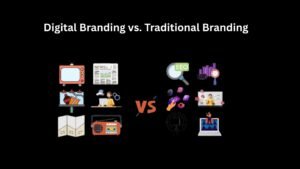
Digital Branding vs. Traditional Branding
Why a Digital-First Approach Matters
In 2025, almost every customer journey starts or passes through a digital channel. A digital-first approach prioritizes:
-
Audience Targeting: The precision to reach a niche audience based on behavior, interest, and intent, leading to a higher ROI.
-
Agility: The ability to pivot content, adapt messaging, and respond to cultural moments faster than traditional media allows.
-
Relationship Building: The capacity for real-time interaction, building a community, and fostering long-term loyalty through personalized experiences.
Strategies for Building a Digital Brand
Implementing the right digital branding strategies ensures that every online interaction reflects your brand’s values, visuals, and voice consistently across all platforms.
Website Design and User Experience (UX)
Your website is the anchor of your digital brand.
-
Branded UX: The website must be fast, mobile-responsive, and mirror the brand identity in its layout, flow, and visual elements. A confusing or slow website communicates unreliability.
-
Purpose-Driven Funnel: Every page should reinforce the brand message while guiding the user toward a specific conversion action.
Strong digital branding strategies integrate UX design principles that balance aesthetics with performance, helping customers connect emotionally and practically with your brand.
SEO and Content Marketing
SEO is no longer just a technical task; it’s a branding pillar.
-
Topical Authority: Instead of just ranking for individual keywords, build authority by creating comprehensive content clusters around your industry’s core topics. This positions your brand as a thought leader.
-
Brand Mentions: The goal is to be a brand that other authoritative sources mention, which search engines interpret as a huge trust signal.
Effective digital branding strategies align SEO and content marketing to strengthen both visibility and credibility, ensuring your brand becomes synonymous with expertise in its niche.
Social Media Presence
This is where your brand voice lives and breathes.
-
Strategic Platform Selection: Don’t be everywhere. Invest deeply in the 2-3 platforms where your target audience is most engaged.
-
Authenticity Over Polish: Audiences value raw, honest, and behind-the-scenes content that humanizes the brand, especially on platforms like TikTok and Instagram Stories.
Innovative digital branding strategies leverage social media storytelling to humanize the brand and foster deeper audience connections.
Influencer Collaborations
Partnering with the right voices expands your brand’s reach and credibility.
-
Value Alignment: Choose influencers whose personal values genuinely align with your brand’s purpose, ensuring the partnership feels authentic to both their audience and yours.
-
Co-Creation: Give influencers creative freedom to tell your brand story in their authentic voice, leading to more believable and engaging content.
Strategic digital branding strategies include influencer partnerships that build trust through authenticity and shared values.
Paid Advertising for Branding
Digital ads should reinforce your brand, not just sell a product.
-
Visual and Tone Consistency: Ensure all ad creative (banners, video cuts, copy) strictly follows the brand style guide. An ad must be instantly recognizable as yours.
-
Targeted Storytelling: Use the hyper-targeting capabilities of paid platforms to deliver different parts of your brand story to different audience segments.

Content Marketing for Branding
Content is the vehicle for your brand story and expertise.
Social Media Branding Strategies
Instagram Branding Tips
Instagram is your brand’s visual mood board. Focus on aesthetics and experience.
-
Unified Feed Aesthetics: Use a consistent color palette, filter, or photo style so your grid looks cohesive.
-
Interactive Stories: Use polls, quizzes, and Q&A stickers to solicit real-time audience feedback, making them feel heard.
Effective digital branding strategies on Instagram blend consistent visuals with interactive engagement, ensuring your audience connects emotionally with your brand story.
LinkedIn for Professional Branding
LinkedIn is for building trust and authority in a B2B or professional context.
-
Thought Leadership: Consistently share original insights, industry analysis, and data-backed articles, positioning key employees as SMEs.
-
Company Culture: Showcase values, team successes, and hiring efforts to attract top talent and build brand goodwill.
TikTok and Short-Form Video Branding
This platform thrives on authenticity and relevance.
-
Trend-jacking with a Twist: Participate in trending audio/formats, but always adapt them with a unique, on-brand message.
-
Raw and Unpolished: Prioritize quick, relatable, and authentic content over high-production value to build a connection with Gen Z.
Modern digital branding strategies on TikTok focus on authenticity and adaptability—meeting audiences where they are while keeping content real and relatable.
Facebook Community Building
Facebook remains the top platform for community and loyalty.
-
Exclusive Groups: Create a private group for loyal customers (e.g., product users, beta testers) to provide value and deepen connection.
-
Engagement-First Content: Use content that encourages conversation, shared memories, or UGC, rather than hard selling.
Personal Branding in the Digital Era
A personal brand is the unique combination of skills, experience, and personality that an individual wants to present to the world.
-
Positioning as an Authority: For freelancers and entrepreneurs, consistently publishing high-quality, niche-specific content (on LinkedIn, a personal blog, or as a podcast guest) is essential to become the go-to expert.
-
Authentic Vulnerability: Sharing personal journeys, failures, and lessons learned builds empathy and deeper trust than simply showcasing successes.
Effective digital branding strategies for personal brands emphasize authenticity, consistent visibility, and storytelling that highlights both expertise and relatability.
Customer Experience and Branding
In the digital world, the experience is the brand.
How UX Affects Digital Branding
A poor UX is a brand failure. Every friction point—a broken link, a slow load time, a difficult checkout—is a negative brand association. Seamlessness communicates professionalism and reliability.
Well-executed digital branding strategies ensure that every interaction—whether visual, technical, or emotional—contributes to a positive user experience that strengthens trust and recall.
Role of Chatbots and AI in Branding
AI tools now represent the brand in real time.
-
Conversational Branding: AI chatbots must be trained to use the brand’s official tone and voice, ensuring that automated support feels friendly, helpful, and on-brand, not robotic.
Modern digital branding strategies integrate AI-powered interactions that reflect the brand’s tone, enhance personalization, and maintain consistency across customer touchpoints.
Omnichannel Consistency
This means the brand experience must be the same whether a customer sees a social ad, visits the website, receives an email, or talks to a customer service agent. The brand promise must be kept at every touchpoint.
Strong digital branding strategies build this consistency, ensuring customers receive the same brand message and emotional experience across every channel they interact with.
Analytics and Measuring Digital Branding Success
Branding can be measured by shifting the focus from immediate revenue to long-term equity.
Tools to Track Brand Awareness
-
Google Search Console / Google Trends: Track branded search volume and how it compares to competitors.
-
Social Listening Platforms: Monitor the total number of mentions and the Share of Voice (SOV) your brand owns within the industry conversation.
KPIs for Digital Branding
-
Brand Recall: The percentage of people who can name your brand when prompted by your product category.
-
Sentiment Score: The ratio of positive to negative mentions across social media.
-
Net Promoter Score (NPS): A measure of customer loyalty and willingness to recommend (collected via website/email surveys).
-
Direct Traffic: The number of users who directly type your URL into their browser, indicating high brand recall.
Measurable digital branding strategies track not just visibility, but sentiment, engagement, and loyalty—helping brands evolve based on real audience data.
Future of Digital Branding
AI-Driven Branding
I is shifting from a tool for efficiency to a partner in creative strategy.
-
Hyper-Personalized Content: AI will dynamically adjust website copy, email subject lines, and even social ad creative in real-time for each individual user to ensure the message is maximally relevant and on-brand.
-
Predictive Branding: AI will analyze market data to predict emerging trends and audience needs, allowing brands to proactively adjust their voice or create content before the trend peaks.
Forward-thinking digital branding strategies now integrate AI not only for automation but for creativity — turning machine learning insights into emotionally intelligent brand experiences.
Virtual Reality and Metaverse Branding
These immersive spaces are the new frontier for brand experience.
-
Immersive Brand Worlds: Creating branded virtual environments (like a virtual store, a product showcase, or a branded game) where users can interact with products and the brand narrative in three dimensions.
-
Digital Collectibles (NFTs): Using NFTs as unique, exclusive digital assets that function as loyalty cards, event passes, or proof of ownership, fostering deep brand advocacy.
The metaverse is reshaping how digital branding strategies engage consumers. Immersive experiences provide a deeper emotional connection, allowing brands to create interactive stories that live beyond traditional media.
Sustainable and Ethical Branding
In 2025, authenticity is paramount. Customers demand transparency on social and environmental issues.
-
Radical Transparency: Brands must clearly and consistently communicate their supply chain, sustainability efforts, and ethical sourcing practices across all digital channels.
-
Purpose-as-Content: Highlighting the brand’s positive social impact (the “why”) as a core part of the content strategy, rather than a separate marketing campaign.
Sustainability is now central to digital branding strategies, helping brands attract conscious consumers while building long-term trust and loyalty.
Case Studies & Examples
Global Brands (Nike, Apple)
-
Nike: Leverages a unified brand purpose (“Just Do It”) across all digital campaigns, from highly produced YouTube videos to user-generated content challenges on TikTok. Their sneaker apps are a perfect example of how strong digital branding strategies can merge UX and purpose seamlessly.
-
Apple: Emphasizes simplicity and elegance in its digital branding. Their website UX is an exercise in minimalist design, reinforcing the brand promise that their products “just work.”
These giants prove that consistent digital branding strategies deliver enduring recognition and emotional engagement across audiences worldwide.
Indian Brands (Zomato, Tanishq)
-
Zomato: Excels in conversational and witty social media branding. Their social channels use humor, relatable content, and trend-jacking to build a young, viral-friendly brand personality that is instantly recognizable.
-
Tanishq: Uses digital storytelling to connect with a mature, emotional audience. Their campaigns often focus on cultural narratives and family values, reinforcing trust and tradition through visual storytelling.
Indian companies show how localized digital branding strategies can balance cultural values with modern marketing techniques to resonate deeply with regional audiences.
Small Business Success Stories
-
Local Coffee Roaster: Uses Instagram stories to show the authentic journey—from bean sourcing to the roasting process—humanizing their product and building a loyal following who connect with the owner’s passion.
Even small brands can thrive using thoughtful digital branding strategies that prioritize authenticity, transparency, and consistent storytelling over flashy ad budgets.
Conclusion: Action Steps for Businesses and Marketers
Digital branding is an investment in your company’s future equity. It’s a continuous process, not a campaign.
-
Define Your Purpose (Deeply): Clarify your brand’s why before its what. This will be the foundation of all content.
-
Audit for Consistency: Conduct a cross-channel audit to ensure your logo, colors, and voice are identical on your website, email, and every social platform.
-
Humanize Your Brand: Prioritize interactive, authentic content (Q&As, live videos, behind-the-scenes) over overly polished, static ads.
-
Embrace the Data: Use analytics to measure sentiment, not just clicks. Let data inform how your brand should speak and what it should speak about.
-
Start Small, Stay Agile: You don’t need to be everywhere, but be consistent where you are. Be prepared to adapt your messaging as new platforms (like the metaverse) and technologies (like AI) evolve.
The most successful digital branding strategies are those that evolve with consumer behavior and technology. By blending creativity, data, and authenticity, brands can build meaningful digital equity that lasts well beyond 2025.
Author:Sadha